

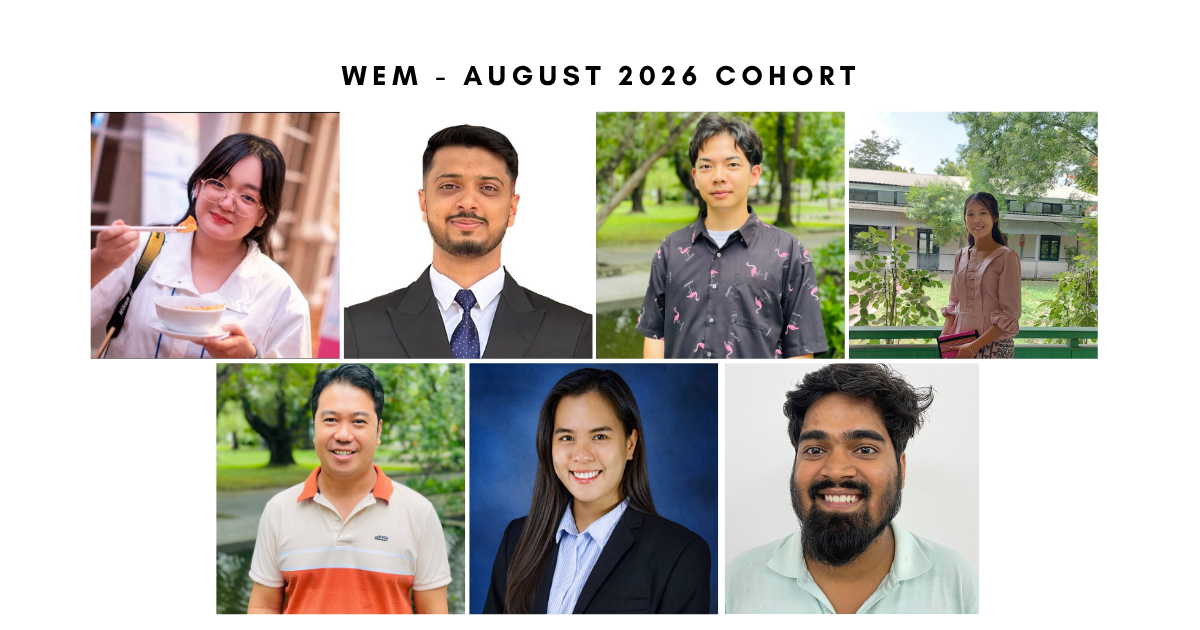
Pathum Thani, August 2026 – A geologist tracing where two rivers meet in Thailand. A forest ranger testing water quality in a Myanmar biosphere reserve. A newly minted civil engineering instructor in the Philippines. From different points, this August, all paths led to the same place: AIT’s Water Engineering and Management program.
WEM’s new cohort spans seven countries — Bangladesh, Japan, Myanmar, Nepal, the Philippines, Sri Lanka, and Thailand — 12 Master’s students, two PhD students, and an exchange student. We sat down with some of these students to ask how they got here, what pulled them toward water engineering, and what they’re hoping to take away from their time at WEM.
Here’s what they told us.
Eduardo “Dward” Bornilla Jr., from the Philippines, joins WEM’s PhD program after a master’s in Integrated Water Management from Griffith University in Australia, where he modeled how Brisbane’s urban water cycle might respond to nature-based development versus business as usual. He found his way to AIT through an alumna he met at a conference, a conversation with a WEM professor that followed, and eventually a visit to campus to meet a potential supervisor. His PhD will extend that modeling work to Southeast Asian cities — building, he hopes, toward a career either teaching green infrastructure back home in the Philippines or advising on nature-based water projects for NGOs.
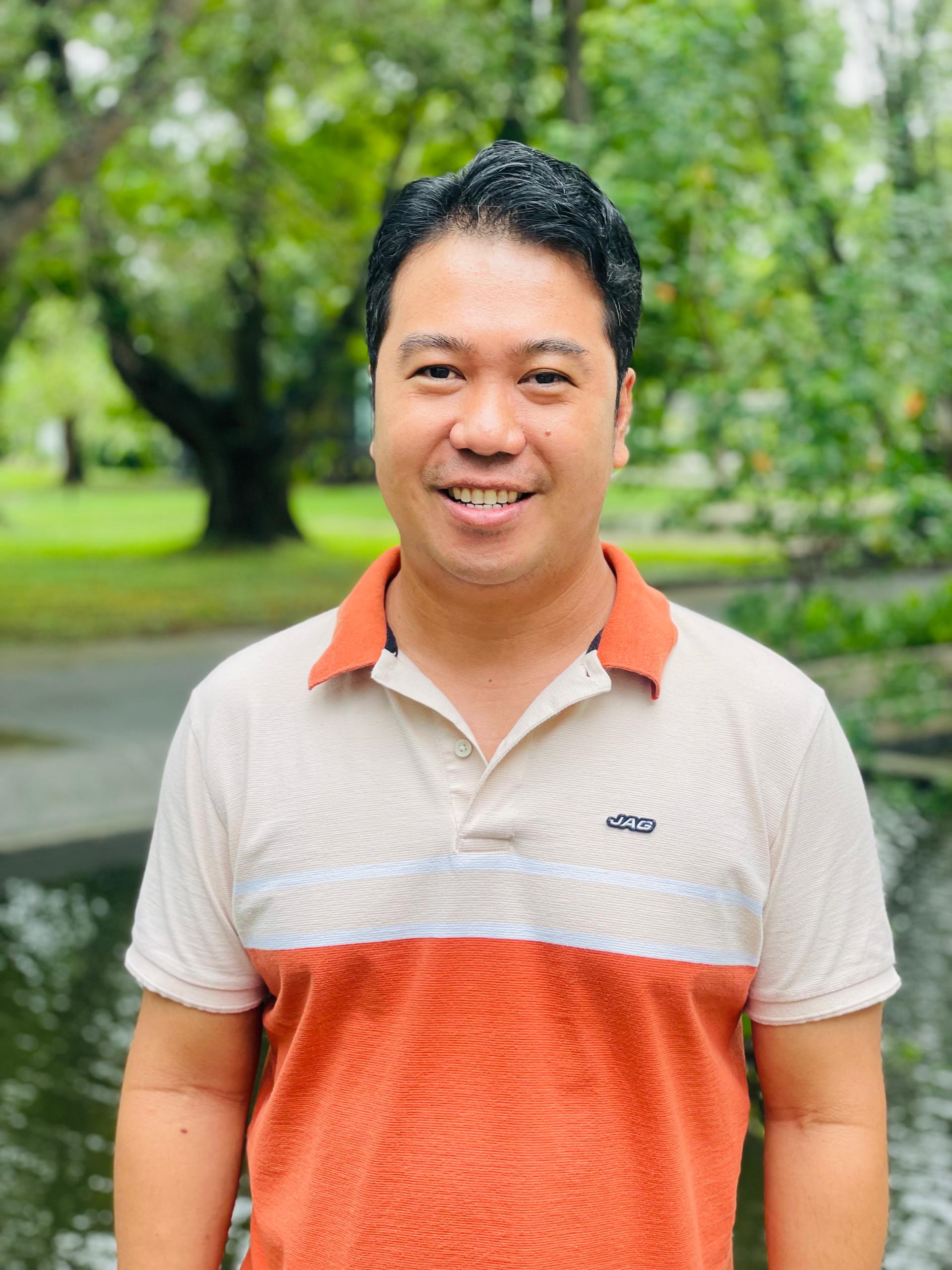
Mr. Eduardo “Dward” Bornilla Jr.
(PhD Student from the Philippines)
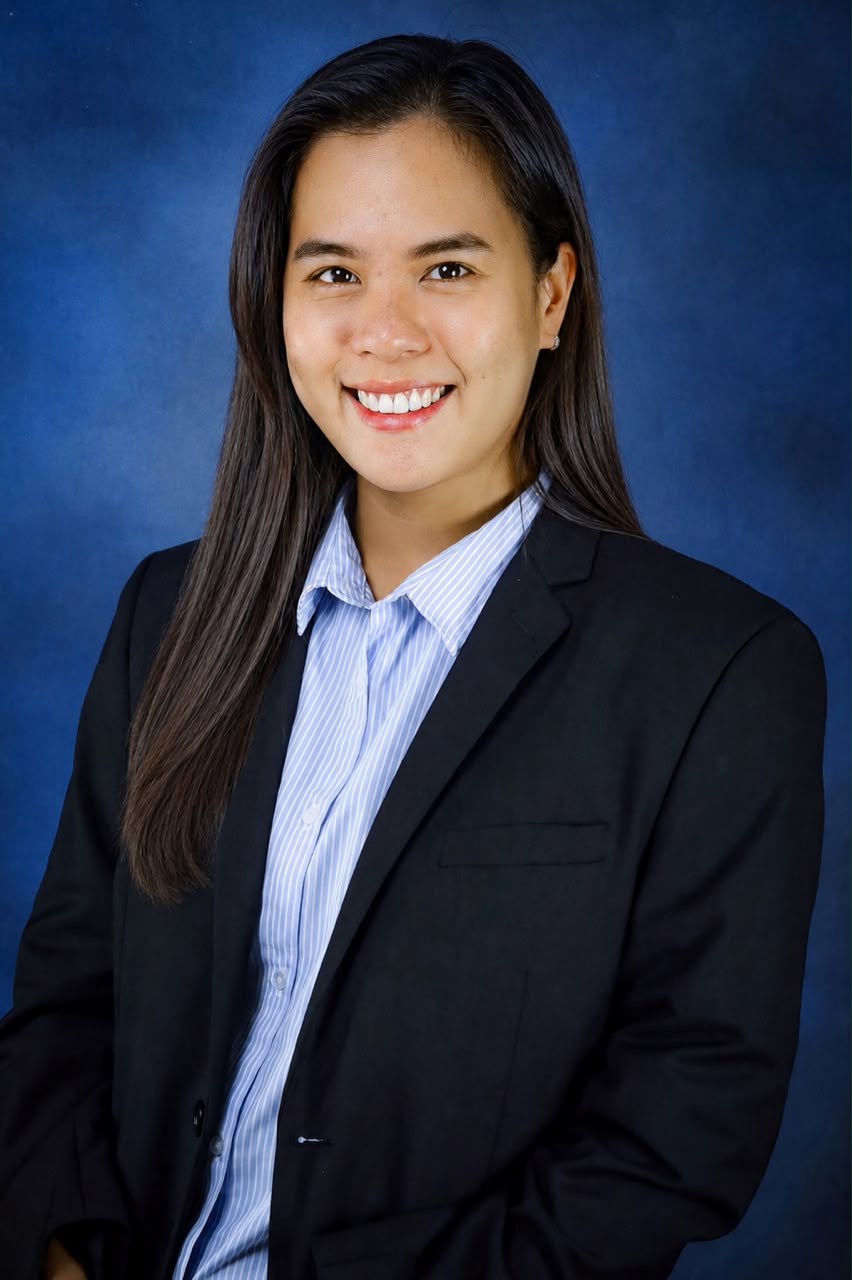
Ms. Marianne L. Dmaicog
(Master’s Student from the Philippines)
Marianne L. Damicog is from the Philippines’ Eastern Visayas region. After passing her board exam, she worked in construction as a project engineer and site supervisor before returning to her alma mater, Visayas State University as a faculty instructor, where she got encouragement from a senior colleague and WEM alumna to consider pursuing her masters in AIT. Her focus now is personal as much as academic: making water supply systems more resilient to the storms and flooding that regularly hit the Philippines, and improving urban drainage in cities where even modest rainfall can flood streets fast.
Kentaro Tanaka, an exchange student from Tohoku University in Japan, is spending two semesters at AIT before returning to Sendai to finish his master’s in civil engineering, where his research focuses on hydro-meteorology and extreme rainfall. The connection runs deep: his supervisor at Tohoku taught at AIT decades ago and has been sending students to WEM ever since. Alongside the coursework, Kentaro has a second goal — using AIT’s English-medium classrooms to push his own English further.
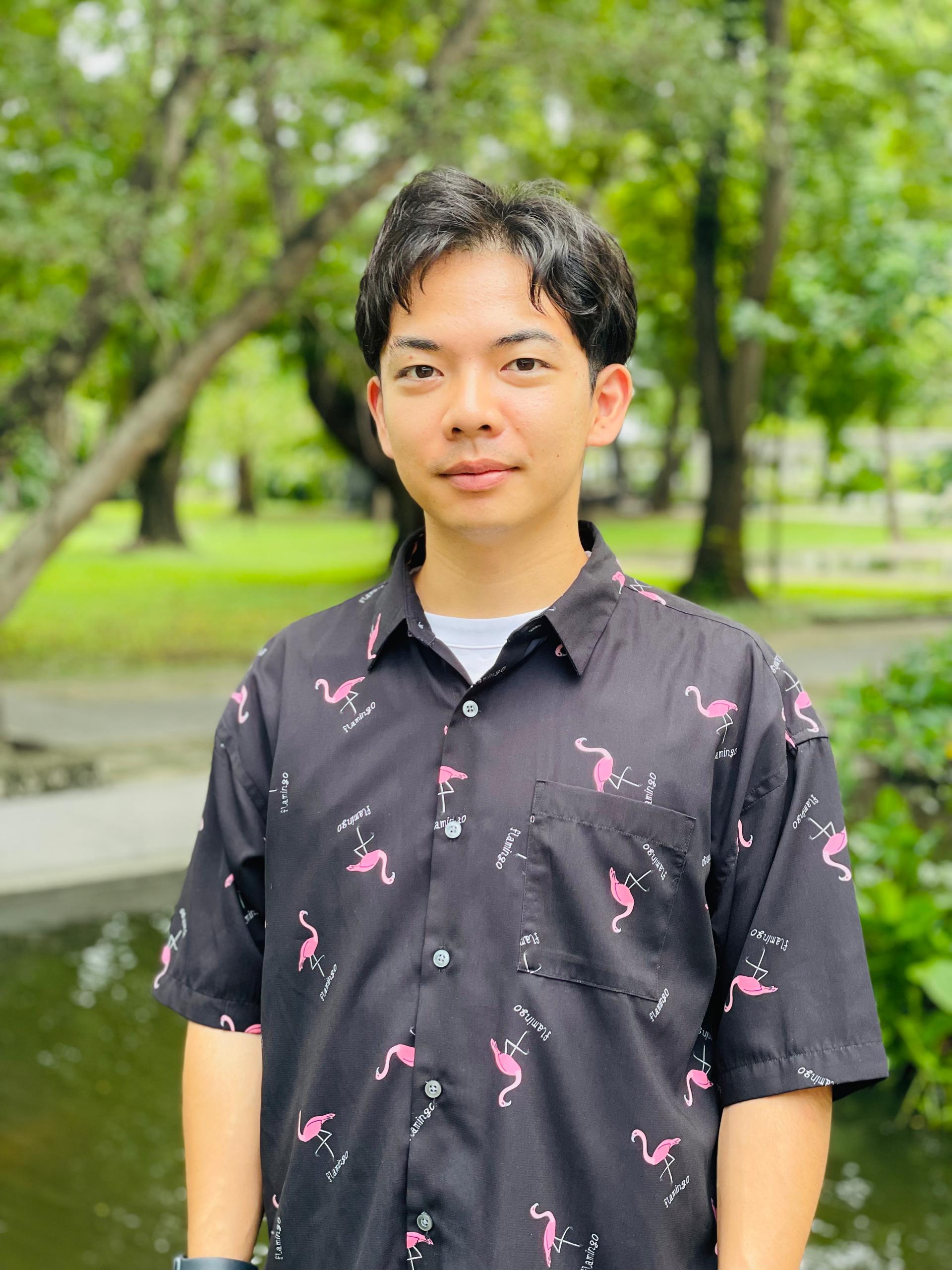
Mr. Kentaro Tanaka
(Exchange Student from Tohoku University, Japan)

Ms. Cholarat Panaphorn
(Master’s Student from Thailand)
Cholarat “May” Panaphorn from Thailand studied geology at Chulalongkorn University, where her final-year project traced how the Pa Sak and Chao Phraya rivers behave where they meet — the turbulence, the shifting sediment. That project pulled her toward hydrogeology, and now toward WEM. “In geology we study rock, and its deep past — it’s not dynamic like water,” she said. “If I understand the dynamic, the present thing, I can combine it, and maybe we can predict the future.”
May Thazin Phoo from Myanmar arrived by way of forestry. After graduating from the University of Forestry and Environmental Sciences in Naypyidaw, May worked as a range officer in Myanmar’s Forest Department, monitoring watershed health and water quality in a managed biosphere reserve alongside international partner. A later career shift moved her into research on river pollution and microplastics — work that kept circling back to water management, which is what eventually led to WEM.
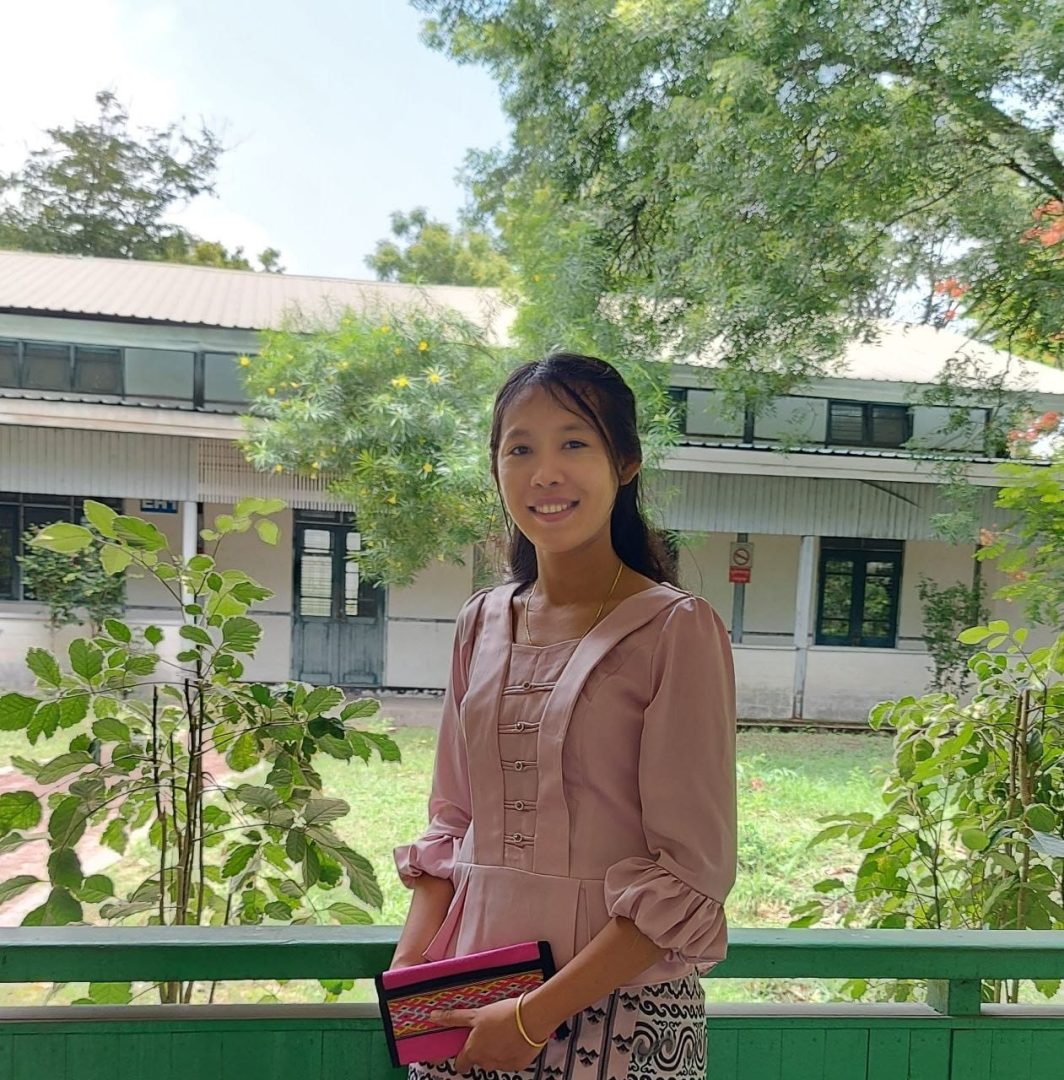
Ms. May Thazin Phoo
(Master’s Student from Myanmar)
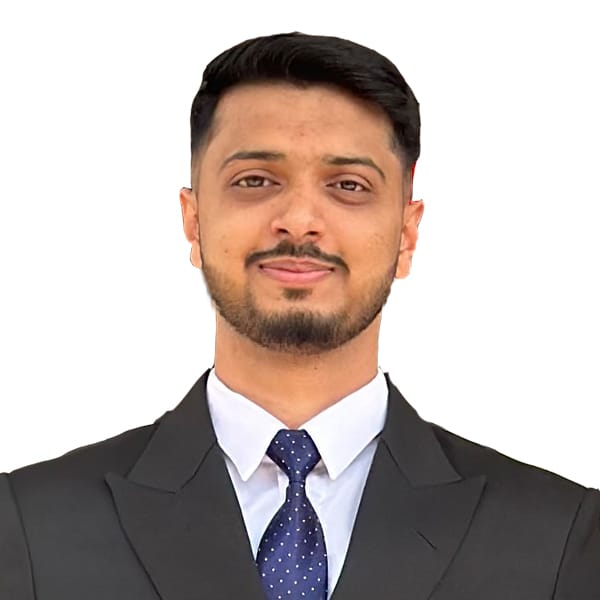
Mr. Saugat Paudel
(Master’s Student from Nepal)
Saugat Paudel from Nepal arrives with a head start: a final-year project on dam-break analysis and a stint as a teaching assistant in hydrology. At WEM, the plan is to push further into where water meets technology — modeling software, and AI applications for basins where data is scarce.
Mohammed Hazrat Ali, who goes by Ali, is eager to translate classroom knowledge into real-world practice. He did his undergraduate in civil engineering — his thesis in water resources engineering — from Chittagong University of Engineering and Technology (CUET) in Bangladesh. Ali has been encouraged by WEM alumna back home, to join the program – his own undergraduate advisors studied in WEM. “I want to work with real-world problems,” he said of his plans after graduating. “I am thinking to take up this degree and go back to my country — work with what problems they are facing.”
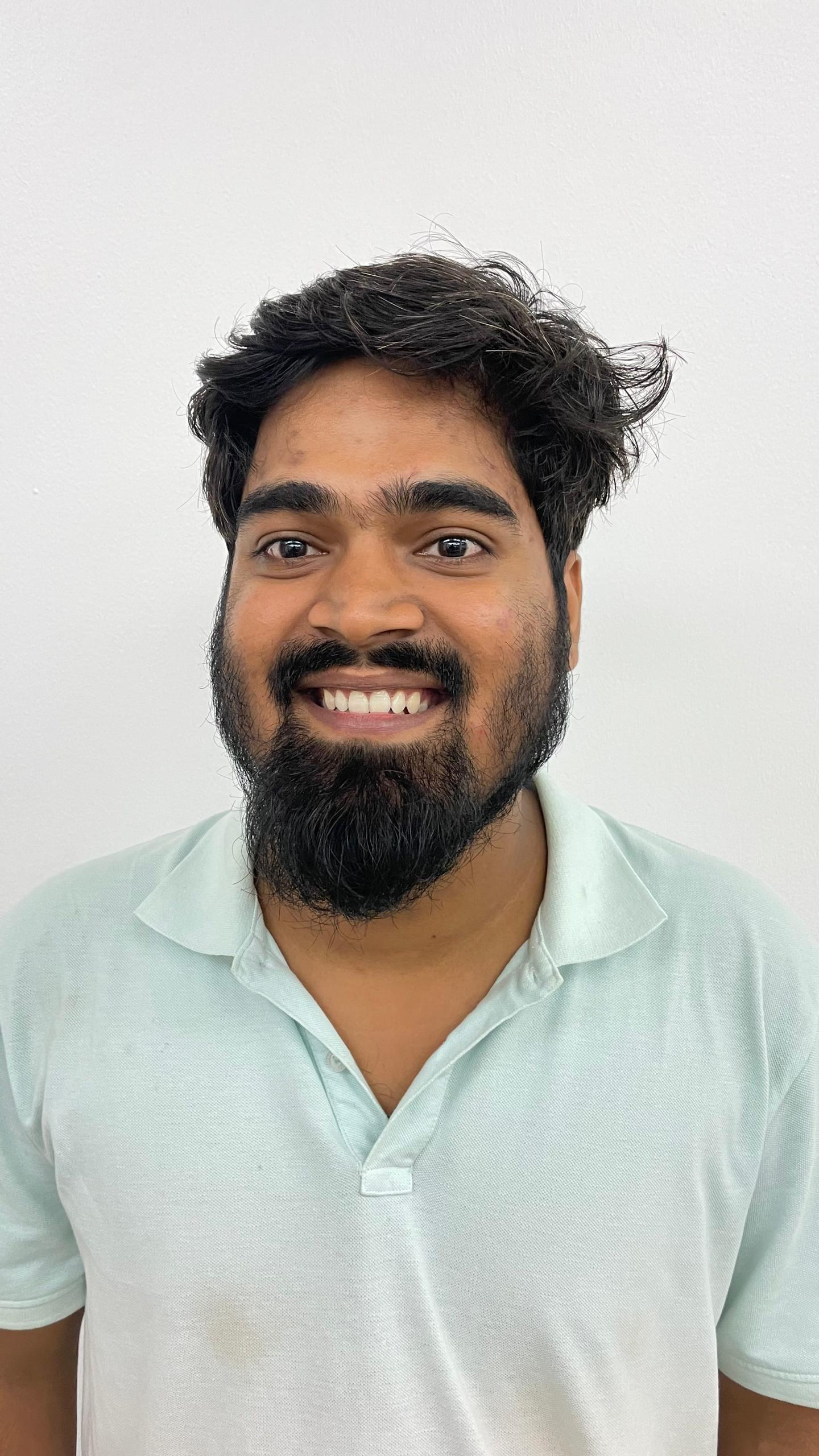
Mr. Mohammed Hazrat Ali
(Master’s Student from Bangladesh)
Geology labs, forest departments, construction sites — the new WEM cohort arrived from seven different countries and about as many starting points, but converged on the same idea that water is where their training can do the most good, at home or beyond it.
Welcome to WEM’s August 2026 class